Thursday, April 22, 2010

Standardized Choropleth Map


http://www.statcan.gc.ca/pub/92f0138m/2008003/figures/5200001-eng.htm

This is a standard choropleth map. Every area represented goes along with the key. There are no areas where the data is left out. The color is also the same throughout the map. In this particular map, it looks at the Canadian population and people under the age of 14.

Univariate Choropleth Map


http://www.ats.ucla.edu/stat/SAS/code/gmap.htm

This is a choropleth map that shows only one variable. In this case it is income. Although there are different colors, it is the same data that we are looking at.

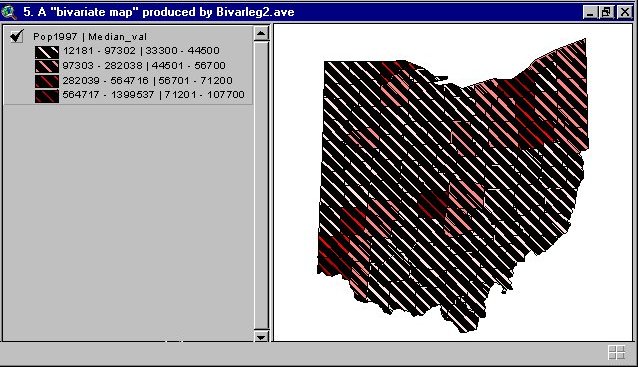
Bivariate Choropleth Map


http://proceedings.esri.com/library/userconf/proc99/proceed/papers/pap171/p171.htm

This is a bivariate map. It is a choropleth map that shows two different types of data. There are stripes along with shaded states.

Classed Choropleth Map


http://www.cdc.gov/pcd/issues/2007/oct/07_0091.htm

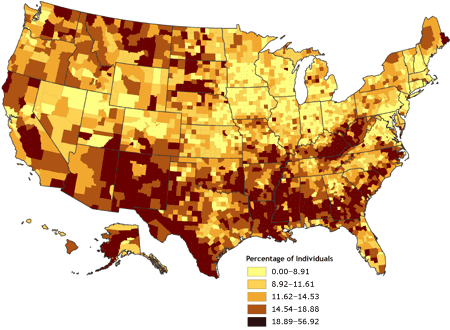
This is a classed choropleth map. As you can see there is one color scheme that represents the data. The darker the shade, the higher the percentage.

Range Graded Proportional Circle Map


http://www.neiu.edu/~ejhowens/377/examples.htm

This is a version of a proportional circle map that shows the number of Mexican's in different states. Rather than have many circles, this map just has one per state.

DOQQ


http://www.crwr.utexas.edu/gis/gishydro00/Class/trmproj/Donnelly/termproject.htm

DOQQ maps are aerial views of the land. Each image shown by DOQQ should be the same size. This map has a infra-red color base. DOQQs can also be black and white.

DEM


http://rrsg.uct.ac.za/activities/activities.html


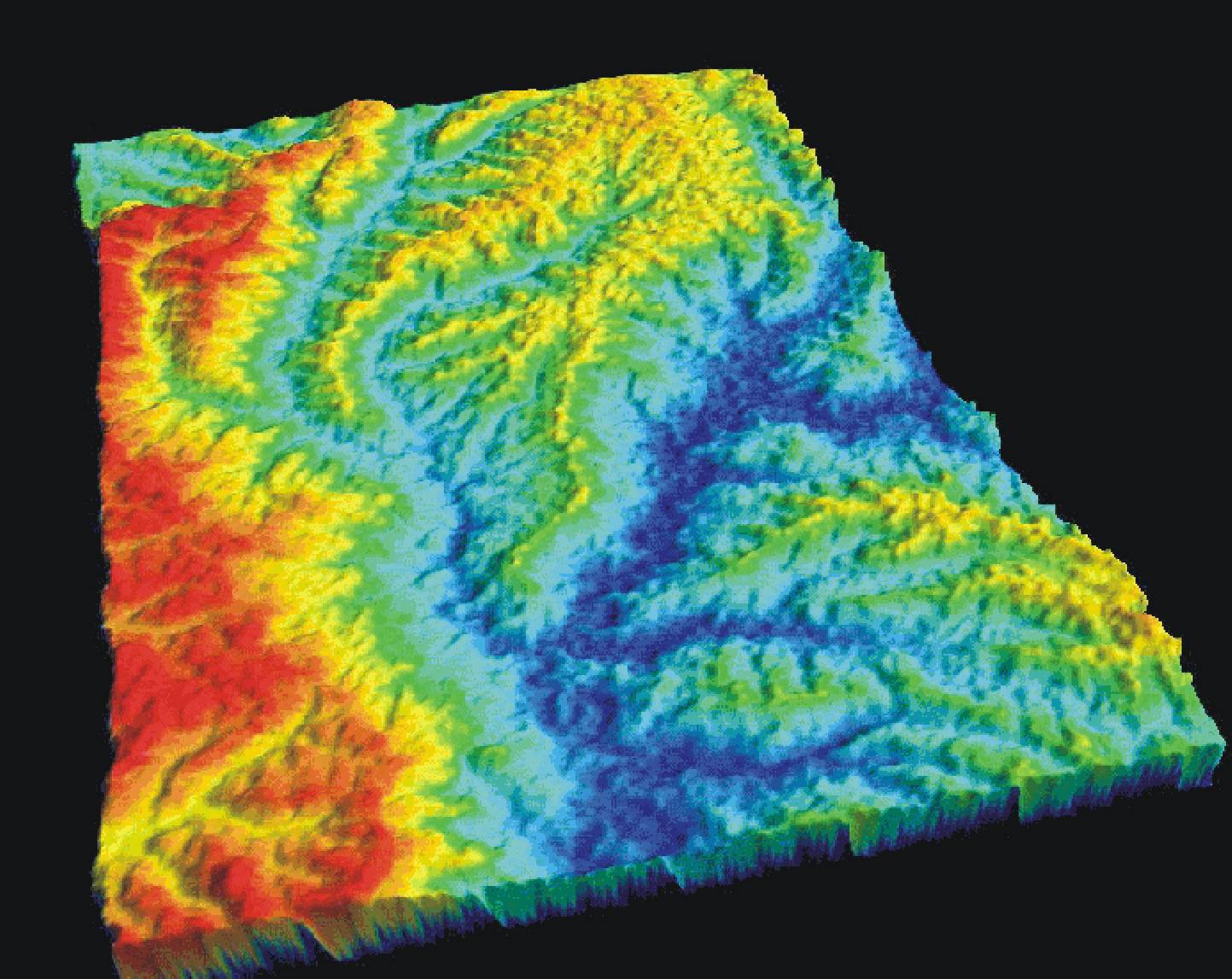
DEM stands for digital elevation model. In this specific example you can see that the red represents the highest elevation while the blue is the lowest.